Beyond Masks: A Designer's View of the Elf Christmas SVG
When a new design lands in my studio, the first thing I do is imagine it stitched. Not just on a screen, but on actual fabric, under a hoop, with thread bringing it to life. So when I saw the ELF Masks Sublimation. Christmas Mask bundle, my mind instantly moved past its intended use. As an embroidery designer and product reviewer, I see files like this as raw material. Their true value isn't in the product description, but in what skilled crafters can transform them into.
The First Impression: Whimsy with Practical Potential
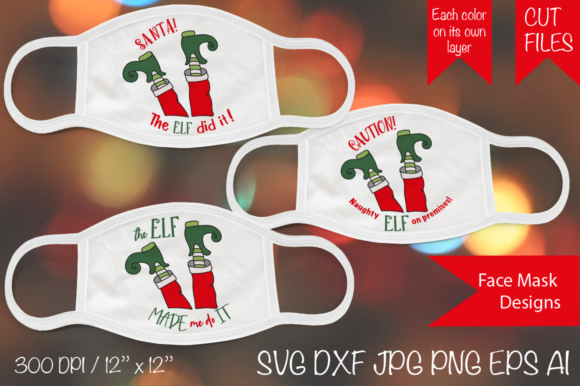
The core idea here is fun, and that’s a powerful starting point. The playful elf legs and sign theme immediately sets a lighthearted, festive mood. Visually, it’s graphic and clear, which is excellent news for embroidery. Overly detailed illustrations can become muddy when stitched; this design, however, has a strong, simple personality that promises good stitch definition. It doesn’t feel like a generic holiday graphic—it has a specific, humorous character. That personality is what can turn a simple embroidered item into a memorable gift or a standout product in a small shop.
I naturally started picturing it not on a mask, but on the corner of a cozy Christmas sweatshirt, or as a bright accent on a canvas tote bag for holiday shopping. The layout, with its central sign and flanking elf legs, suggests a balanced composition that would work well as a chest logo or a bag’s focal point.
Where This Elf Design Truly Shines in Embroidery
For crafters and small business owners, the real question is: what can I make with this? The ELF Masks Sublimation. Christmas Mask design, reinterpreted as an embroidery file, opens up a wider range than the original category suggests.
Think about custom apparel for the holidays. Embroidering this onto a high-quality cotton sweatshirt creates a durable, soft-touch gift that beats a printed tee. On a crisp apron, it becomes a charming addition for someone hosting a festive dinner. Stitched onto a tea towel or a pillow cover, it injects whimsy into home decor without being overwhelming. For baby items, like a little knit hat or a holiday-themed bib, the design’s friendly character is perfect—though scale would be crucial.
One of the strongest applications I envision is as an embroidered patch. This design, with its defined shapes, could be stitched onto felt or twill and then applied to anything: a backpack, a blanket, a cap. That versatility is gold for Etsy sellers and makers at craft fairs. It allows for a single, well-executed embroidery design to become multiple products. A boutique could use it on their staff’s holiday uniforms, or a creative entrepreneur could offer personalized gifts with a customer’s name worked into the sign area.
The Practical Realities: Stitching This Design Successfully
Confidence in a design comes from knowing how it will perform under the needle. Here’s where a designer’s practical judgment kicks in.
The humorous, graphic nature of ELF Masks Sublimation. Christmas Mask means clarity is key. You’ll want to preserve the clean lines and the legible text on the sign. This makes thread color contrast against your fabric background absolutely essential. On a dark fabric like navy or black, you’d need to plan for bright, possibly layered stitches to keep the design popping. On light fabrics, you have more freedom, but still need to avoid colors that blend in too much.
Areas like the elf legs, depending on how they’re digitized for embroidery, could involve fill stitches or satin stitches. Satin stitches for outlines can look beautiful but require good stabilizer, especially on stretchy fabrics like t-shirts or on curved surfaces like caps. If the design is dense, using the right stabilizer becomes non-negotiable to prevent puckering and maintain a professional finish.
Caution Zones: Where to Test Before Committing
Every design has its sweet spot and its challenges. For this one, the small details are the area for careful inspection. The lettering on the sign and the potential tiny corners of the elf shoes are places where stitch clarity can be lost if the embroidery file isn’t optimized for smaller hoop sizes. I would strongly advise testing this design on scrap fabric first, especially if you plan to stitch it at a smaller scale for items like baby clothes or caps.
Textured fabrics, like some sweaters or bag canvases, can also swallow fine details. If you’re working with a fabric that has a pronounced weave or nap, a test run will tell you if you need to adjust stitch density or perhaps even simplify certain elements. Also, consider the product’s life. An item like a kitchen towel or a child’s garment that needs frequent washing benefits from a robust, less delicate stitch construction.
From Thread to Trust: The Business of a Well-Embroidered Design
For the makers, Etsy sellers, and apparel decorators reading this, the final stitch isn’t the end—it’s the beginning of a customer’s experience. How a design like this looks after embroidery directly impacts visual appeal, product value, and customer trust.
A clean, crisp rendition of this elf design on a tote bag or sweatshirt speaks of professionalism. It tells the buyer that the maker pays attention to quality. That builds brand consistency for a small shop and enhances the handmade presentation—it feels crafted, not just slapped on. This kind of design, when executed well, has high giftability. It’s recognizable, fun, and personal. It engages buyers because it’s specific and story-driven: it’s not just “Christmas,” it’s “Christmas elves being playful.”
Before selling any finished product, however, the most critical step is confirming the licensing. The original product is categorized as Illustrations and of the type Graphics. This typically means the files are digital assets. You must verify the license terms to understand if you can use the design for commercial embroidery projects, sell the physical items you make with it, or use it in digital product previews like printable mockups for your shop. Never assume; always check.
A Designer’s Final Notes Before You Hoop It Up
My process for any new design asset is methodical. For the ELF Masks Sublimation. Christmas Mask, I would:
- Run a test on scrap fabric that mimics my final product fabric—both light and dark versions if I plan to offer both.
- Check the thread color palette against my fabric to ensure strong contrast and visual pop.
- Review the stitch density in my embroidery software to see if it’s suitable for my intended fabric (e.g., lightweight vs. heavyweight).
- Confirm the minimum hoop size required to keep all details, especially text, sharp and clear.
- Inspect the small details like the sign lettering in a black-and-white mockup to see pure shape clarity.
- Use proper stabilizer for my test and final project—this is half the battle for a clean finish.
- Ultimately, treat it as a starting point. The design’s whimsical personality is its strength; my job as a maker is to translate that into stitches that tell the same joyful story.
Whether you’re preparing a custom holiday gift, stocking your boutique with embroidered merchandise, or simply adding a festive touch to your home decor, approaching a design with this practical mindset turns a digital file into a tangible product that holds its value—and its charm—long after the holiday season ends.